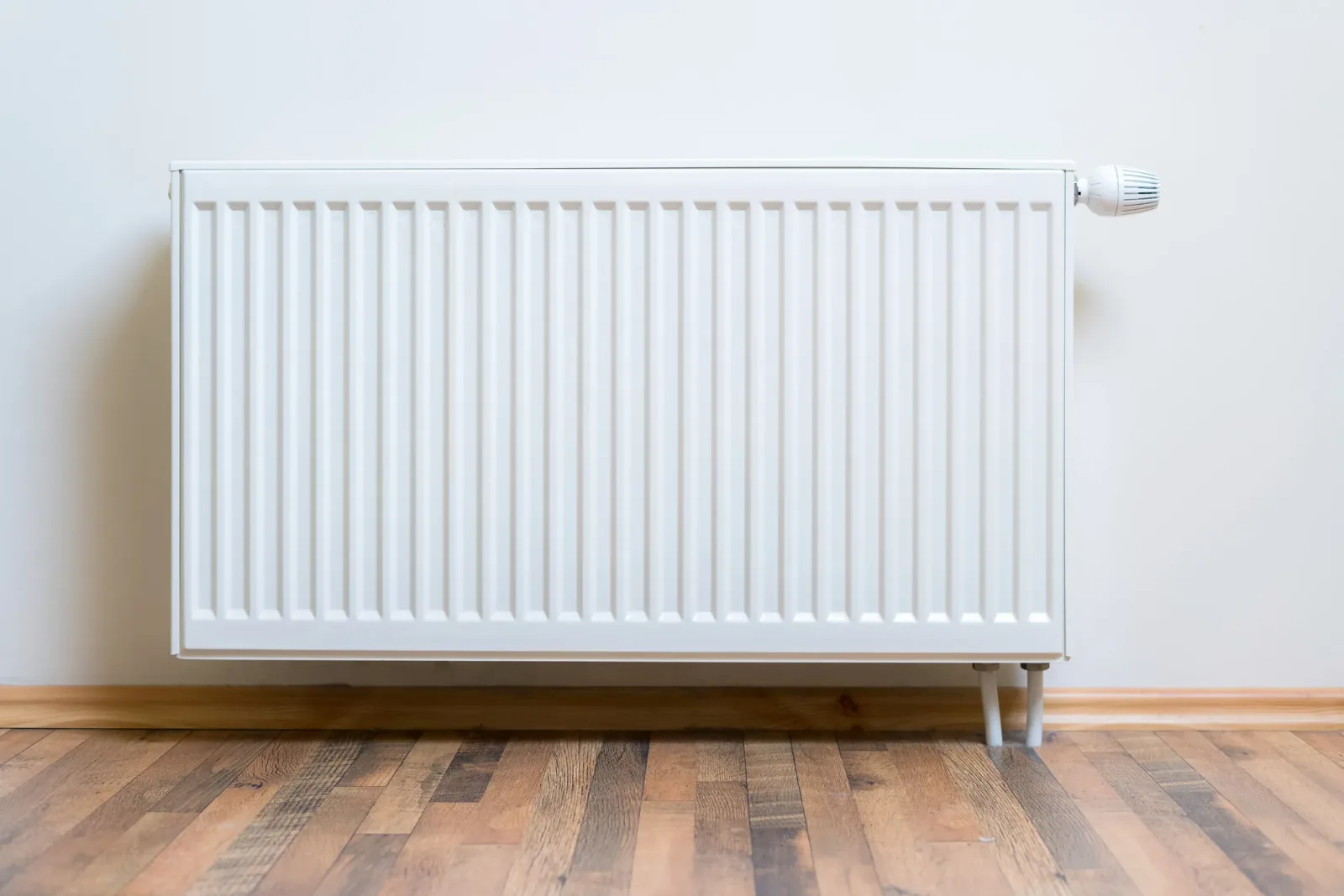
Sludge is rust: over the years steel radiators and water react, and the black iron oxide that forms settles in the bottom of every radiator and collects in valves and pumps. Radiators go cold in patches, the boiler gets noisy, and the pump works harder than it should. A power flush shifts that debris out with cleaning chemicals and strong flow, then leaves inhibitor behind to slow the corrosion down again.
What you can expect
- Sludge, rust and scale cleared from the system
- Cold panels and noisy circulation tackled at the cause
- Inhibitor added so corrosion stays slow
- Boiler and pump protected from debris
- System checked first: we say if a flush is not the answer
Signs the system is sludged
Radiators cold at the bottom while the top is hot are the classic sign. Others include radiators needing bleeding every few weeks, black or brown water when you bleed them, a boiler that kettles and rumbles, some rooms never quite warming, and pumps or zone valves failing more often than they should. None of these confirm sludge on their own, which is why we check the system and its history before recommending the work.
How the flush is done
A power flushing machine connects to the system, usually in place of the circulating pump or across a radiator tail. Cleaning chemical circulates at speed while each radiator is flushed in turn and agitated to lift sediment off the panels; magnets on the machine catch the iron oxide as it passes. Dirty water is dumped and replaced until the system runs clear, then inhibitor is dosed in at the right strength. Expect it to take most of a day for a typical house, with water samples at the end so you can see the result.
What a flush cannot fix
A power flush cleans; it does not repair. A perforated radiator will still leak after the cleanest flush, a failed pump still needs replacing, and a boiler part already damaged by debris needs attention regardless. In heavily corroded systems, one or two radiators are often past it and are better replaced during the flush. We tell you which is which at the quote stage, in writing, before any work starts.
Frequently asked questions
How do I know whether I need a power flush or just a repair?
A single problem radiator is usually a repair; a houseful of symptoms is usually the system, and we check before quoting.
Will the boiler get quieter?
If the noise is kettling caused by debris on the heat exchanger, often yes, though a damaged boiler part still needs its own fix.
Is the quote free?
Yes, quotes are free and in writing. We flush systems across East London, including Rotherhithe and Limehouse.
Need help with this service?
Tell us what you need and our East London team will talk you through the next step. Call for urgent help or send an enquiry for a free quote.