
A radiator is one of the fundamentals of your heating system. It warms your home during the winter. But radiators do not always function. If your radiator is not heating you, then it is maddening, particularly at the driest time of the year when you need it most. The nice thing is that there are plenty of potential reasons why your radiator may not be functioning up to par, and they’re often repairable.
Here on our blog, we’re going to discuss the best means of why your radiator is not working and how to repair it. If it’s air in the radiator, a broken valve, or otherwise, we will classify the problem and how to repair it. Let us begin!
-
Trapped Air in the Radiator
Likely the most frequent cause that your radiator will not heat is air in the system. Air tends to get into the radiator system and stop hot water from flowing. The radiator will heat one half of the unit, and the other half will be cold if this occurs.
How Air Gets Trapped
Air gets into the radiator system when the heating system is initially charged with water or accumulates with time. It’s fine, but after air bubbles get into it, there is a circulation of hot water with the passage blocked. This produces cold spots on the radiator.
How to Fix It?
The answer to the problem is easy: bleeding the radiator. Radiator bleeding is a method of releasing water that has become trapped behind air. Bleeding can be done using a boiler radiator key and opening the tiny valve located on the end of the radiator. Once you have let the air out, the hot water should then be able to flow freely, and your radiator will heat up normally again.
Conclusion
If your radiator is not warm, air could be locked in the radiator. Bleeding the radiator is easy, and your home will be warm once more.
-
Wrong Thermostat Setting
Your radiator won’t heat up sometimes because your thermostat setting is wrong. Your thermostat controls the temperature in your home, but if it is set too low, then your radiator will not be hot enough to heat the room.
How to Test Your Thermostat
Ensure that the thermostat is positioned in the right position at the right temperature. It is just that other people are negligent about turning off the thermostat when there is a change in the weather. If the thermostat is maintained too low, then the radiator will not be in a position to heat the room to the right temperature.
How to Fix It?
Merely turn the thermostat to the temperature you want. Look at the controls and set it by programming if you have a digital thermostat. The thermostat can be replaced when it’s faulty or extremely old.
Conclusion
Basic thermostat settings could be the answer to why your radiator won’t heat. Look at the temperature controls and reset for the desired heat.
-
Thermostatic Radiator Valve (TRV) Problems
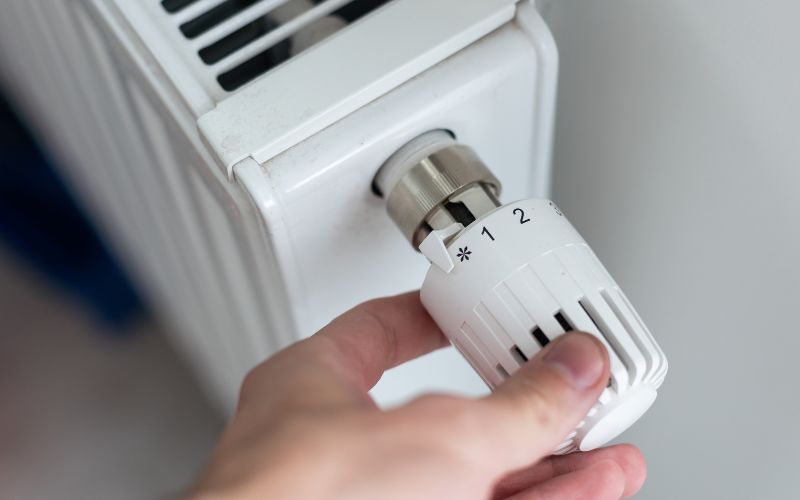
Many new radiators have a thermostatic radiator valve (TRV) to regulate the amount of hot water supplied to the radiator. A malfunctioning TRV can make the radiator inoperable.
What Can Go Wrong with the TRV?
The TRV will become clogged or won’t function in the long term. It may clog with dirt, or the movable component in it will rust. When that occurs, the valve won’t open, and the radiator won’t be hot.
How to Fix It
You can slide the TRV slowly and see if this improves things. If it has stuck, you may have to take the valve off and obtain a clean. Occasionally, the TRV will have to be replaced completely. In case you are not certain, a heating expert can assist you.
Conclusion
Another probable cause of your radiator not warming up is a stuck or blocked TRV. It can be corrected by fixing or replacing the TRV and checking it, thereby enabling heat to about radiator.
-
Insufficient Water Pressure in the System
The second common reason your radiator won’t heat up is low system water pressure. Water pressure is required to push hot water through pipes and into radiators. Without high pressure, there won’t be enough hot water to heat the radiator.
How Does Water Pressure Work on the Radiator?
Low pressure may be a sign of a system leak, a stuck valve, or a boiler fault. The radiator would warm half in certain places or would not warm up at all during low pressure.
How to Fix It
To fix low water pressure, you will check the pressure gauge on your boiler. All boilers come equipped with an in-built gauge that has the pressure reading. If the pressure is low, you will re-pressurize the system by filling it up with water via the filling loop. Be careful to follow the manufacturer’s guide so that you do not end up harming the system.
Conclusion
Low water pressure can stop your radiator from heating properly. Checking and adjusting the pressure should get your radiator working again. If you’re unsure how to do this, consider calling a heating professional.
-
Blockages in the Pipes
Build-up of clogs in your hot water system to your radiator over time will be inevitable. This is due to dirt, rust, or sludge settling in the system. Clogs limit the free flow of hot water to the radiator, therefore inefficient heating.
How to Identify Blockages
If some parts of the radiator are warming up or even the whole unit is cold in certain areas, the clog is to blame. You may even notice low water pressure or hear some strange noise from the system.
How to Fix It
If blocked, you will be requested to drain the system in an attempt to clear out the sludge and debris. It should be left to experts as it involves the use of equipment and technical know-how. It is serviced regularly in an attempt to prevent the development of the blockage.
Conclusion
Clogged pipes may hinder your radiator from warming up. If you suspect you have a blockage, it would be advisable to call in a professional and have him drain and flush your heating system.
-
Defective Pump or Boiler
There are times when your problem with your radiator is not the radiator itself, but rather the pump or boiler. The pump is what will circulate the hot water in the system, and if the pump is not working, the water will never make it to the radiator.
How to Know if the Pump or Boiler is the Problem
If your whole heating system is not working, or not even any hot water at all is going through the radiators, then the problem must be with the boiler service or the pump. Those are the ones that push the heat where it has to go.
How to Fix It
If you discover the pump or boiler to be faulty, then you have to contact the heating engineer. He will examine the system and replace or repair the defective part. Proper servicing of your boiler and pump can prevent you from such accidents.
Conclusion
A faulty boiler or pump will also ensure that your radiator doesn’t heat up. If the problem is with the boiler or pump, then an expert will have to be called in to get it fixed.
Conclusion: Getting Your Radiator Heating Up Once Again
If your radiator isn’t heating up, there could be any number of reasons. From low water pressure to airlock, there are a few things that will wreak havoc on your heating system. But nine times out of ten, they are extremely easy to repair with a little TLC. If you need to bleed the radiator, check your thermostat, or replace a valve, it can be an easy job to undertake. But if you don’t know how to fix it, it is always best to have a heating expert fix it.
FAQs (Frequently Asked Questions)
-
Why is my top radiator cold but the bottom one hot?
It is likely because of air trapped in the radiator. You can fix it by bleeding the radiator to get rid of the trapped air.
-
How do I know whether my radiator needs bleeding?
If your radiator is only heating halfway or it has spots of cold, you will have to bleed it in an effort to expel air that is stopping the hot water from flowing through.
-
What if my radiator is still not warm after bleeding?
If bleeding the radiator does not work, inspect for other reasons such as low water pressure, a jammed valve, or a malfunctioning thermostat.
-
Can low water pressure prevent a radiator from heating?
Yes, it may not be able to supply the radiator with enough hot water, and therefore, it will not heat as expected.
-
Under what circumstances would I ever need to employ a heating expert?
Should bleeding the radiator, thermostat check, and resetting water pressure fail to improve the situation, then it is time to engage the services of a heating expert to check for clogs, a malfunctioning pump, or other defects.