Winter is coming, and you have to condition your house so that it will be warm. Your central heating and boiler are among the items which you have to condition. They are the machines which warm your house during winter. If they have not been conditioned, then your house will not be warm. This is how you can use a guide so that everything is prepared for winter.
Why would you require a central heating and boiler check?
Your boiler and heating have to work more during winter. Your heating and boiler heat your home. The weather can become an issue if you are not prepared with your system. If you take care of your boiler and heating system before cold weather comes, it will last longer and save you money. Your system will stay safe, work well, keep you warm, and cost less to maintain.
Step 1: Check Boiler Pressure
Check the boiler pressure first. Your boiler will not work if its pressure is less than it needs to be. Your radiators will not heat up, or your hot water will not be as warm as you want it to be.
- To test pressure, take a look at your boiler gauge. It should be 1 to 1.5 bars precise. If not, then you can top up the system with water to make up for the shortfall. If in doubt, see the handbook or get it professionally done.
Step 2: Bleed Your Radiators
Your radiators may not heat a corner room. That is because air has been trapped inside. You will bleed the radiators to remedy that.
You switch your radiator key on your radiator valve. You should be able to hear the air escaping. You’ll have to have water on after turning it on until you finish closing off your valve. This will heat your radiator nicely and give you a good central heating system.
Step 3: Check for Leaks
Leaks are also the biggest threat to your heating system. One leak the size of a pinhead alone will render your system less efficient and cause more serious problems down the line. Inspect your pipes, radiators, and boiler for signs of leaks.
If there are leaks, have them repaired before winter. Even the smallest leak will still be a problem, so it is best to have it repaired as soon as possible.
Step 4: Get Your Boiler Serviced
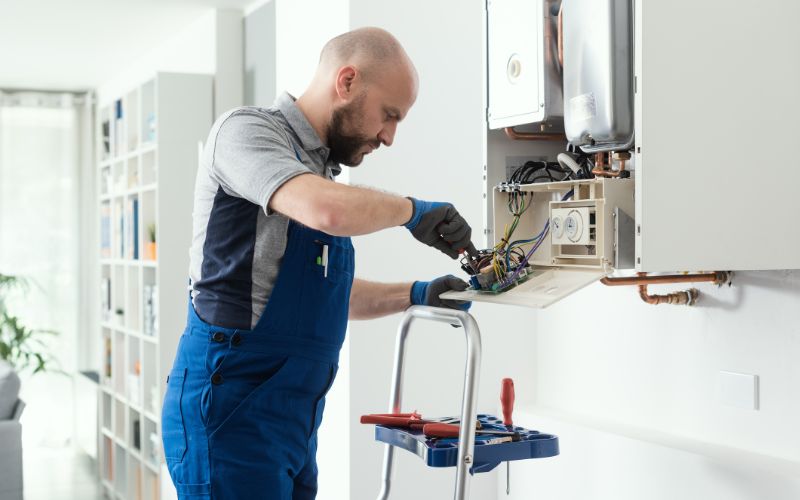
Have your boiler serviced annually by a person professionally qualified. Servicing picks up faults before they develop. Your boiler will be descaled, leak-checked, and overhauled so that all works well.
Annual servicing optimizes your boiler’s lifespan and keeps its cost of running costs low in bills. This will be cheaper to fix as well.
Step 5: Pipe and Tank Insulation
Pipes frost in winter, particularly if not insulated. Water pipes’ water will freeze. Frozen water pipes will burst. It can cause flooding and a costly fix.
Prevention is always better. Insulate the pipes, particularly pipes that have been installed in your attic or basement. Pipe insulation can be easily purchased in most hardware stores, or have a professional do it for you.
Step 6: Check Your Heating System
Let your heater run for a couple of hours when it is going to be cold outside. You are able to run everything and ensure that all things are in the right working state. If in the situation you realize there is something wrong, you have enough time to repair it before you are going to need heat.
Inspect all the radiators to determine if they’ll warm up. If a radiator will not warm up as much as it should, then the valves or the pump aren’t functioning.
Step 7: Clean Your Boiler’s Filters
Boilers also contain filters which trap grains of dirt and dust. They will clog up eventually, and that renders your boiler useless. It is easy enough to clear out the filters so your system will function.
Refer to your boiler manual to clean filters. If unsure, get a heating engineer to clean it for you.
Step 8: Clean Around Your Boiler
Ensure the area around your boiler is clean. Dust and dirt will restrict airflow when the boiler is installed in a cupboard or an enclosed area. It will reduce the efficiency of your boiler.
DAILY, tidy around your boiler and clear anything that might restrict airflow. It will keep your boiler healthy and will never overheat your boiler.
Step 9: Top Up Your Fuel Levels (If You Have Oil or LPG Boilers)
If you are operating your house with LPG or oil, ensure that you have previously filled the amount of fuel. It is better to have no heat in your house than to consume the fuel over winter. Store some fuel as backup in advance so you won’t be crying later on during winter.
Step 10: Check Your Thermostat
Your home is heated or cooled by your thermostat. Without it, you would be cold or hot. Try to test your thermostat to find out if it is functioning or not. Turn the heat on and off to test if it functions.
If you have a bad or outdated thermostat, now is the time you replace it. A new programmable thermostat will consume less energy and will warm your home.
Step 11: Clean Air Grills and Vents
Clean air grills and vents, if present in your heater. The dust and dirt will definitely choke the air flow, and thus your system may not function as it is intended to. Dryer Vent Cleaning Kit.
Make the vents free of obstructions and allow free air to pass through using a vacuum cleaner. This is a very minor thing that can make your heating system more efficient.
Step 12: Replace Your Heater
If your boiler is inefficient and old, attempt to replace it. New boilers are more energy efficient, and therefore they are very expensive – they cost a lot of money.
Go and see a heating engineer and inquire if you can replace your house with a brand new boiler. He will assist you in how to select the right one for you.
Final thought
By checking off this boiler and central heating checklist, you’ll be winter-ready. With your system maintained, your radiators installed, and your thermostat in top condition, your home will be warm and snug. By doing this easy preparation, you’ll keep your head above water and prevent breakages at the worst possible time. Keep warm this winter!
FAQs On Central Air Heating and Boiler Preparation
-
How often should I have my boiler serviced?
You need to have your boiler serviced annually. It will detect the fault in advance and make your boiler sound.
-
What do I do if my boiler is making unusual noises?
Unusual noises coming from your boiler can be a sign that all is not well. Always try to take a glance at this with someone suitably qualified to look at it. It could be air in the system, or
even a sign of something quite more serious.
-
What can I do to avoid pipes freezing over winter?
Don’t wrap pipes and put them in the freezer. You can also get foam pipe insulation at most local grocery stores. In addition, heat your away-from-home residence, not freeze pipes.
-
How can I reduce my winter heating bill?
To be thrifty on your bill for heat, have the boiler serviced. You don’t bother with checking the likes of the radiators and the thermostat now and then. You will also need to install insulation to heat the house.
-
How often do you need to replace your thermostat?
If your thermostat is failing to retain heat, it needs to be replaced. If your thermostat is dead or useless, it will be cheaper and heat your house.